Stamp duty & registration charges Karnataka
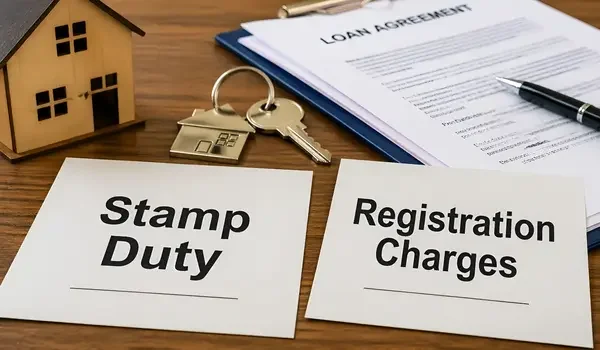
Stamp duty & registration charges in Karnataka are compulsory state taxes on buying property, where registration takes 2% of the deal value and basic stamp duty takes 2% to 5% based on house cost slabs. The state stamp office takes these fees under the Karnataka Stamp Act, 1957, picking whichever number is higher between your sale deal price and the local government guidance value.
If your house sits in city limits like Bengaluru under the BBMP, you also pay a 10% road cess and a 2% city surcharge on your stamp duty bill. That means any home priced over ₹45 lakh has a total state tax bill of 7.6% of its price. The whole system runs online through the state's Kaveri 2.0 website, from uploading sale papers to paying challan fees and booking visits for over 250 sub-registrar offices.
Current Stamp Duty and Property Registration Slabs in Karnataka
Karnataka has three stamp duty price slabs for property buyers. Homes priced up to ₹20 lakh have a base stamp duty rate of 2%, while homes priced above ₹45 lakh have a base rate of 5%. The sub-registrar checks the sale price and the government guidance value of the property. Stamp duty is then calculated using whichever value is higher.
- Homes up to ₹20 Lakh: You pay 2% basic stamp duty plus a fixed 2% registration fee.
- Homes between ₹20 Lakh and ₹45 Lakh: You pay 3% basic stamp duty plus a fixed 2% registration fee.
- Homes over ₹45 Lakh: You pay 5% basic stamp duty plus a fixed 2% registration fee.
Karnataka gives no special discounts or cuts for women buying property. Men, women, and joint buyers all pay the same tax rates on every deal.
Breakdown of Cess, Surcharges, and Registration Fees in Karnataka
Cess and extra local fees in Karnataka are calculated as a share of your stamp duty, adding an extra 12% on top of the base stamp duty in city areas. City offices and village offices use slightly different fee shares:
| Fee Name | City Areas (BBMP & City Councils) | Village Areas (Gram Panchayats) | How It Is Calculated |
|---|---|---|---|
| Base Stamp Duty | 2% to 5% | 2% to 5% | Higher of deal price or guidance value |
| Road & Infra Cess | 10% of stamp duty | 10% of stamp duty | Calculated on the stamp duty amount |
| Local Council Surcharge | 2% of stamp duty | 3% of stamp duty | Calculated on the stamp duty amount |
| Registration Fee | 2% of property value | 2% of property value | Calculated on the total property price |
| Total Tax Rate (Above ₹45 Lakh) | 7.60% | 7.65% | Total government charges on the property |
In city zones like Bengaluru, the 10% cess and 2% surcharge add up to 12% of your stamp duty. For homes over ₹45 lakh, this adds 0.6% on top of the 5% duty, bringing your full tax bill to 7.60%.
Step-by-Step Mathematical Calculation Formula
Finding your total government tax means picking the larger amount between your sale price and the guidance value, then adding up duty, extra fees, and registration step by step. Here is the exact math to follow:
- Taxable Value (V): The higher amount between your actual sale price and the government guidance value.
- Base Stamp Duty (SD): Taxable Value × 5% (applicable to properties above ₹45,00,000).
- Infrastructure Cess (C): Base Stamp Duty × 10% (equals 0.50% of property value).
- City Surcharge (S): Base Stamp Duty × 2% (equals 0.10% of property value).
- Registration Fee (RF): Taxable Value × 2%.
- Total Payable (T): Base Stamp Duty + Infrastructure Cess + City Surcharge + Registration Fee = 7.60% of Taxable Value.
Purva Cityspire, Bellandur: Stamp Duty & Registration Analysis
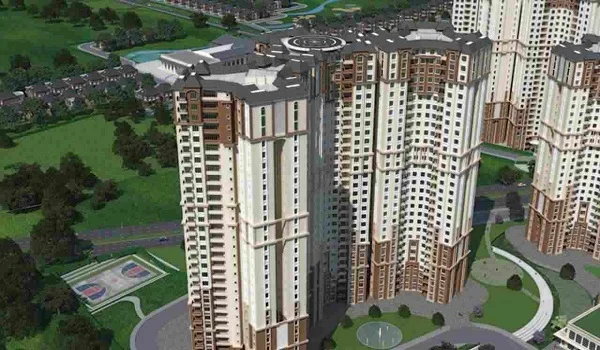
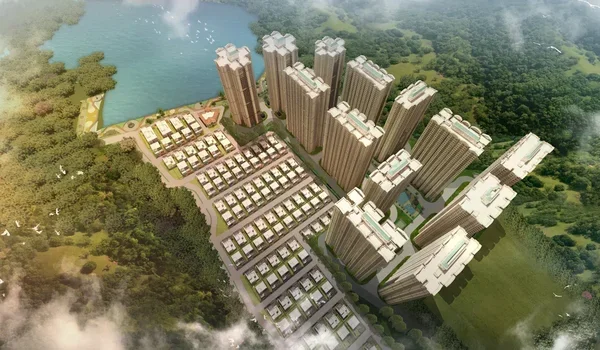
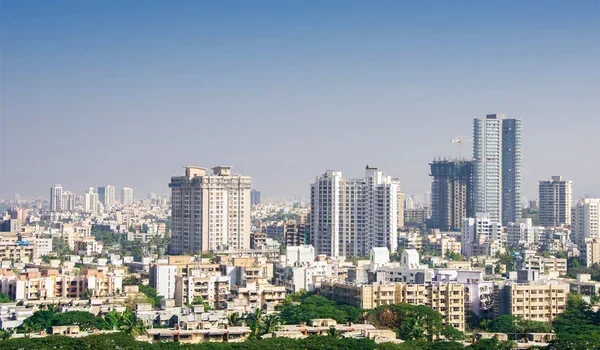
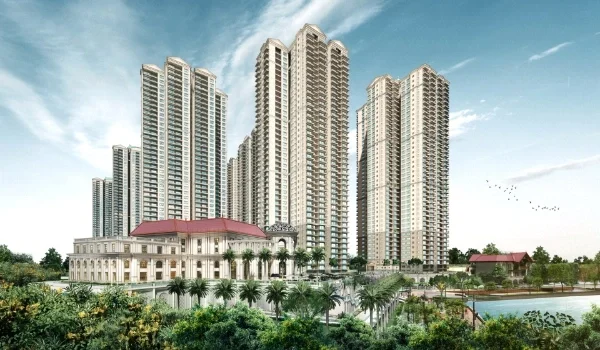
Purva Cityspire is a 6-acre luxury flat project by Puravankara Limited on Outer Ring Road in Bellandur, East Bangalore (PIN 560103), where every single flat costs more than Karnataka’s ₹45 lakh cut-off slab. Since all homes across its two high towers (G+35 and G+38 floors) cost above ₹45 lakh, every buyer pays the highest 5% base stamp duty slab along with the 2% registration fee. The project sits in the BBMP city zone just 900 metres from Helios Business Park and 1.7 km from the new Kadubeesanahalli Blue Line Metro, so every flat sale also attracts the 10% cess and 2% city surcharge.
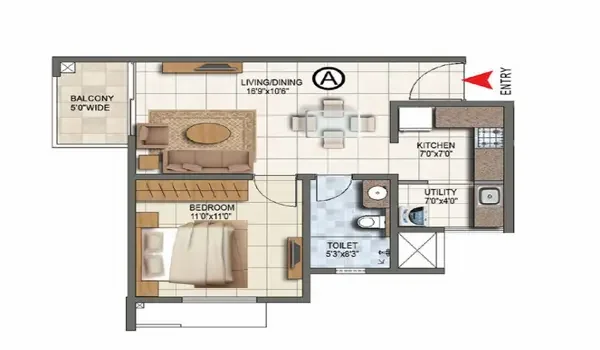
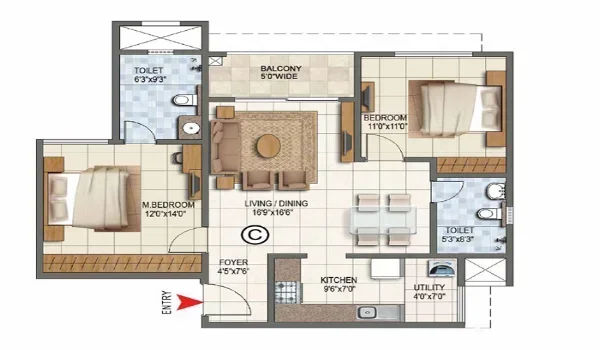
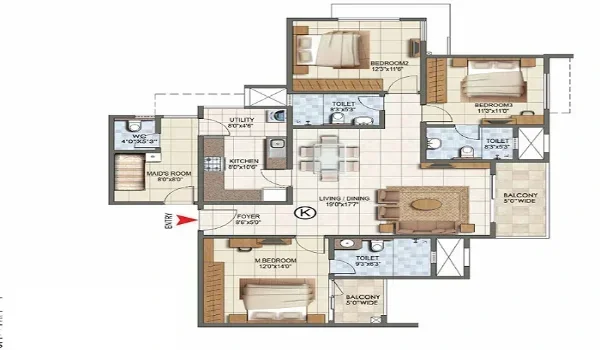
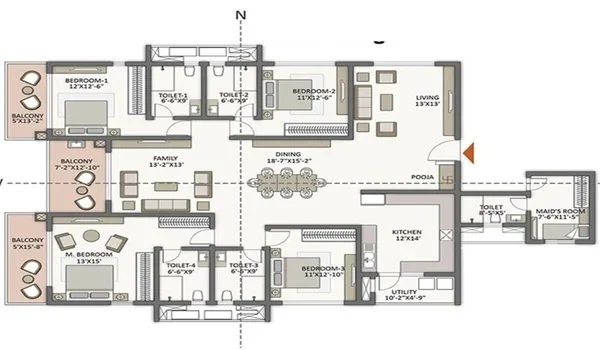
Project details show that Purva Cityspire flats start at a base rate of ₹13,000 per sq ft across 1, 2, 3, and 4 BHK homes. Here is the exact cash breakdown for stamp duty, extra fees, and registration costs for each home size:
| Flat Type | Flat Size (Sq Ft) | Starting Price (V) | Stamp Duty (5%) + Cess & Surcharge (12% of duty) | Registration Fee (2%) | Total State Tax (7.60%) |
|---|---|---|---|---|---|
| 1 BHK | 700 – 800 sq ft | ₹97,50,000 | ₹5,46,000 | ₹1,95,000 | ₹7,41,000 |
| 2 BHK | 1,150 – 1,400 sq ft | ₹1,50,00,000 | ₹8,40,000 | ₹3,00,000 | ₹11,40,000 |
| 3 BHK | 1,700 – 2,100 sq ft | ₹2,21,00,000 | ₹12,37,600 | ₹4,42,000 | ₹16,79,600 |
| 4 BHK | 2,600 – 3,200 sq ft | ₹3,38,00,000 | ₹18,92,800 | ₹6,76,000 | ₹25,68,800 |
If you buy a 1 BHK at the ₹97.5 lakh base price, you will pay ₹7.41 lakh in total state fees. For a family 3 BHK priced at ₹2.21 crore, your total state tax comes to ₹16,79,600, split as ₹12,37,600 for stamp duty with cess and ₹4,42,000 for registration. These fees are paid separately while following the builder's 10:80:10 staged payment plan before you get your registered sale deed.
Online Payment Methods and the Kaveri 2.0 Registration Process
Home buyers pay stamp duty and book office appointments directly on the Kaveri 2.0 portal, which connects online bank payments with the Stock Holding Corporation of India Limited (SHCIL). The website walks you through five simple steps:
- Create an Account: Sign up on the Kaveri 2.0 site, pick "Document Registration", and enter the property's PID or survey number.
- Check the Value: The website works out the minimum guidance rate on its own and checks it against your agreed flat price.
- Pay the Fees Online: Pay your stamp duty, cess, and registration fee through net banking, NEFT, RTGS, or print an e-challan to pay at a bank counter.
- Book Your Visit: Pick a time slot at your local sub-registrar office to sign papers, get your photo clicked, and scan your fingerprints.
- Download the Deed: Once the sub-registrar checks and clears your papers, download your signed legal sale deed right from your portal dashboard.
Mandatory Documentation for Property Registration in Karnataka
Registering your property deed in Karnataka requires basic property papers and personal ID cards to prove clear ownership and paid taxes:
- Sale Agreement & Draft Sale Deed: The main property transfer paperwork printed on government stamp paper.
- Encumbrance Certificate (EC - Form 15): A record paper showing property deals and clean titles over the last 15 to 30 years.
- Latest Khata Certificate and Extract: A valid BBMP A-Khata or E-Khata showing your flat is listed on city municipal records.
- Property Tax Receipts: Official tax slips proving all city property taxes are paid up to date.
- Approved Building Plan: Clear layout and tower permits given by the BDA, BMRDA, or BBMP.
- Buyer & Seller ID Proofs: Original Aadhaar cards, PAN cards, and clear passport-sized photos of both sides.
FAQs
The registration fee is a flat 2% of the property's deal price or guidance value, whichever is higher. Every district and town in Karnataka uses this same 2% rate.
No, Karnataka does not give any stamp duty discount to women buyers. Men, women, and joint owners pay the same 2%, 3%, or 5% tax rates.
If your deal price is lower than the guidance value, the sub-registrar ignores your deal price. Your stamp duty and registration fees are calculated on the higher guidance value instead.
Yes, buyers using the old tax regime can claim tax deductions up to ₹1,50,000 under Section 80C of the Income Tax Act. You can only claim this benefit in the same financial year you pay the fees.
If you gift property to a close family member (like parents, spouse, or kids) within BBMP limits, you pay a flat stamp duty of ₹5,000 plus a ₹500 registration fee. Gifting to non-family members costs the full 5% stamp duty plus a 2% registration fee based on market value.